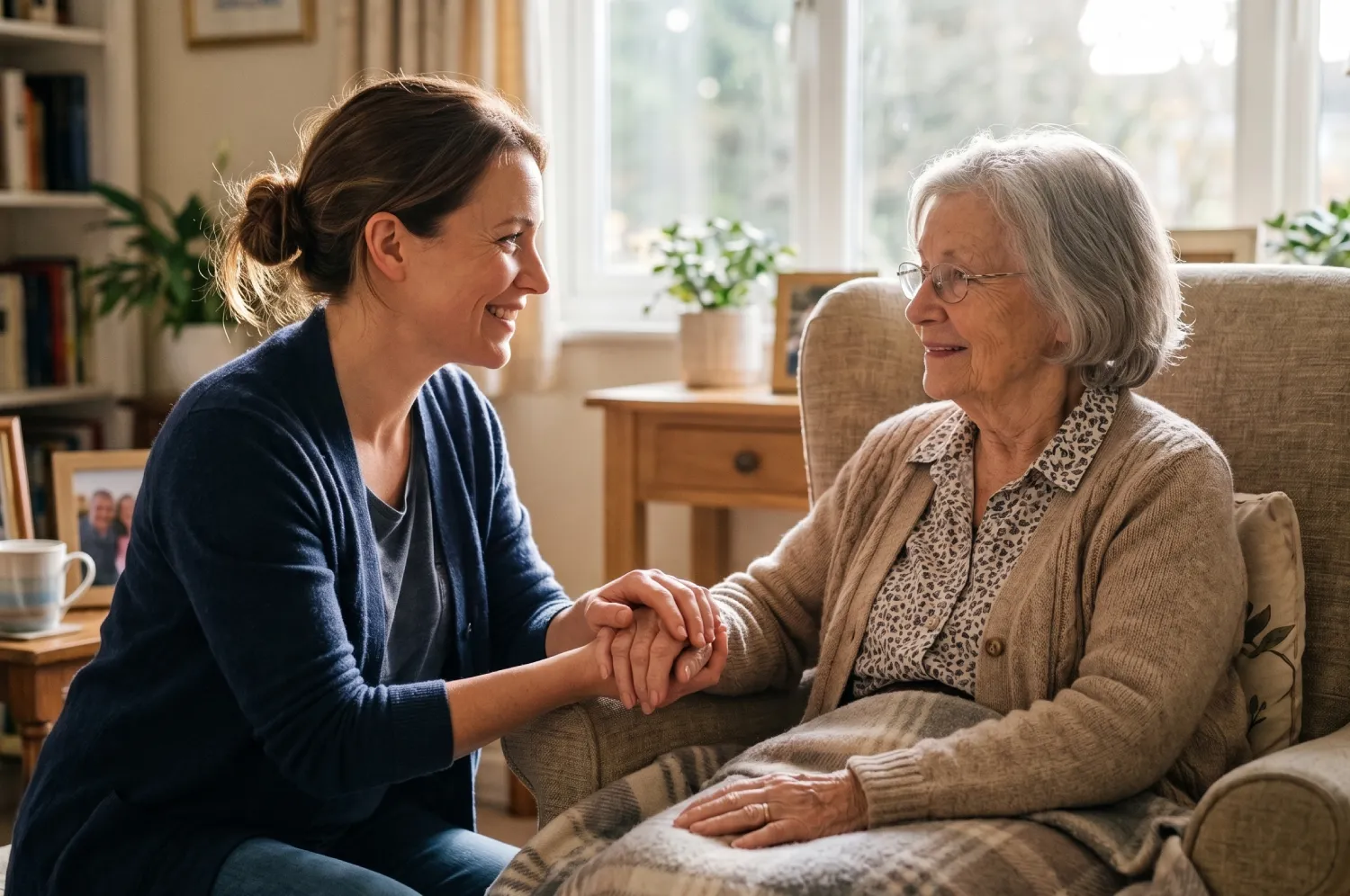
When a family learns a loved one has dementia, attention immediately turns toward the person receiving the diagnosis. Questions arise quickly: What comes next? How will symptoms progress? What support is available? How can we help our loved one remain safe and comfortable?
These concerns are understandable and important. Yet there’s another person whose wellbeing often receives far less attention: the caregiver.
Whether it’s a husband, wife, son, daughter, sibling, or close friend, someone usually steps into the role of helping navigate daily life. That individual often becomes the planner, advocate, decision maker, scheduler, and emotional support system for the entire family.
Over the years, one truth has become increasingly clear to me. Dementia care isn’t just about the person living with the disease. The caregiver plays an equally important role. When caregivers become overwhelmed or exhausted, it affects the quality of care they can provide. When they receive support and have opportunities to recharge, everyone benefits.
A Role Few Expect to Take On
Most caregivers never set out to become caregivers.
For many families, the transition happens slowly. A spouse begins helping with a few extra tasks around the house. An adult child starts attending medical appointments. Someone begins managing medications, paying bills, or coordinating services.
At first, these changes may seem minor. Over time, however, the responsibilities continue to grow.
Many caregivers reach a point where they suddenly realize how much their lives have changed. What started as occasional assistance has evolved into managing nearly every aspect of another person’s daily routine.
Unfortunately, dementia caregiving doesn’t come with a handbook. Every individual experiences dementia differently, and every family situation is unique.
That’s why it’s important for caregivers to give themselves grace. No one has all the answers from the beginning. Much of the journey involves learning along the way.
Responsibilities that Continue to Add Up
As dementia progresses, caregivers often find themselves taking on more and more responsibilities.
Spouses frequently become responsible for duties their partners handled for years. In addition to managing household tasks, they’re also coping with the emotional impact of watching the people they love change over time.
Adult children face a different set of challenges. Many are balancing careers, raising children, and supporting aging parents simultaneously. Their days often become filled with work responsibilities while evenings are spent coordinating care, running errands, and solving problems.
One reason caregiving can feel so overwhelming is that the workload rarely increases overnight. Instead, responsibilities accumulate gradually until caregivers are carrying far more than they ever imagined.
Even when families have the best intentions, caring for a senior loved one with dementia can be challenging. Fortunately, Assisting Hands Home Care is here to help. We are a leading provider of dementia care Columbus families can trust. You can take advantage of our flexible and customizable care plans, and our caregivers always stay up to date on the latest developments in senior care.
The Hidden Impact of Isolation
One of the most common experiences caregivers share is a sense of isolation.
Even when friends and relatives are supportive, they may not fully understand what daily dementia caregiving involves. Social activities become harder to attend. Hobbies are set aside. Plans are frequently interrupted.
Over time, caregivers can begin to feel disconnected from the people and activities that once brought balance to their lives.
For spouses, the loneliness can be especially difficult. The partners they once relied on for conversation, companionship, and decision-making may no longer participate in the same ways. While they remain together physically, the relationship often changes emotionally.
This is one reason caregiver support groups can be so powerful.
I’ve seen caregivers enter support meetings feeling discouraged and alone only to discover others facing remarkably similar situations. The simple realization that they’re not the only ones struggling often provides enormous relief.
Being understood by people who have walked a similar path can make a tremendous difference.
Learning that Accepting Support Isn’t Failure
Many caregivers believe they should be able to handle everything on their own.
I remember speaking with a husband who was caring for his wife at home. He loved her deeply and felt it was his responsibility to manage every aspect of her care personally.
When family members suggested bringing in additional help, he resisted. To him, accepting support felt like admitting defeat.
Eventually, professional caregivers began assisting several days a week. Something interesting happened almost immediately: during those visits, he left the house.
Sometimes he met friends. Sometimes he ran errands. Sometimes he simply enjoyed a few hours without constantly being on alert.
The result wasn’t less involvement in his wife’s care. It was the opposite. He returned home refreshed, calmer, and more capable of providing support.
Taking breaks didn’t make him a worse caregiver. It helped him become a better one.
One of the most challenging tasks of helping a loved one age in place safely and comfortably is researching agencies that provide home care. Families can turn to Assisting Hands Home Care for reliable, high-quality Columbus home care for aging adults. We offer 24-hour care for seniors who require extensive assistance, and we also offer respite care for family caregivers who need a break from their caregiving duties.
Recognizing What’s Realistic
Many caregivers place unrealistic expectations on themselves.
They believe they should be able to solve every problem, meet every need, and handle every responsibility independently. When they cannot, feelings of guilt often follow.
I often encourage caregivers to consider three simple questions:
- What do I want to do?
- What am I willing to do?
- What am I able to do?
The answers aren’t always the same, and that’s perfectly okay.
Someone may want to provide all care personally but lack the physical ability to do so safely. Another person may be comfortable managing appointments and finances but need help with personal care tasks.
Acknowledging those realities isn’t selfish. It’s responsible.
The goal isn’t perfection. The goal is creating a sustainable care plan that supports everyone involved.
Making Time to Recharge
Caregiving can easily become a full-time responsibility.
Many caregivers become so focused on another person’s needs that they neglect their own health and wellbeing. Medical appointments get postponed. Exercise routines disappear. Friendships receive less attention.
What feels temporary at first can gradually become a long-term pattern.
The caregivers who tend to navigate this journey most successfully understand self-care isn’t optional. They intentionally create opportunities to recharge.
For some, that means joining a support group. For others, it may involve spending time with friends, enjoying a favorite hobby, taking a walk, or simply enjoying a few hours of quiet.
The specific activity matters less than the opportunity to reconnect with yourself.
Several years ago, a caregiver shared a comment that has stayed with me ever since. She said, “I spend so much time taking care of my husband that sometimes I forget I matter too.”
Her words capture an experience many caregivers understand.
Dementia impacts the person living with the disease, but it also profoundly affects those providing care. That’s why caregiver support isn’t simply helpful—it’s essential.
The caregivers who do best over the long term aren’t those who never need assistance. They’re the ones who build support systems, accept help when needed, and make room for their own wellbeing.
Because caring for yourself isn’t separate from caring for someone you love. It’s one of the most important ways to support both of you.
Family caregivers need to care for their own wellbeing. If you’re caring for an aging loved one and are feeling overwhelmed, consider hiring a professional caregiver. Whether you need respite from your caregiving duties or your loved one needs Columbus 24-hour home care, Assisting Hands Home Care can meet your family’s care needs. Our dedicated caregivers are available around the clock to provide transportation to doctor’s appointments, ensure seniors take their prescribed medications, and help with a variety of tasks in and outside the home. Call today to speak with a friendly and experienced Care Manager to formulate a home care plan for your loved one.
Want to learn more about dementia and the challenges families face along the journey? Join me for my monthly Real Talk webinar, where I take an in-depth look at a specific dementia- related topic. Click here to learn more and register.