Enhancing communication when providing dementia care requires patience, empathy, and practical strategies that adapt to your senior loved one’s changing needs. Effective communication helps your loved one maintain dignity, reduces confusion, and strengthens the emotional connection between the two of you. This guide offers actionable techniques to improve your interactions and create a more supportive care environment.
Why Is Nonverbal Communication Important in Dementia Care?
Nonverbal cues often communicate more than words when caring for someone with dementia. As verbal abilities decrease, people increasingly rely on body language, facial expressions, and tone of voice to understand and express themselves.
Key nonverbal communication strategies include:
- Maintain eye contact to show you’re engaged and present.
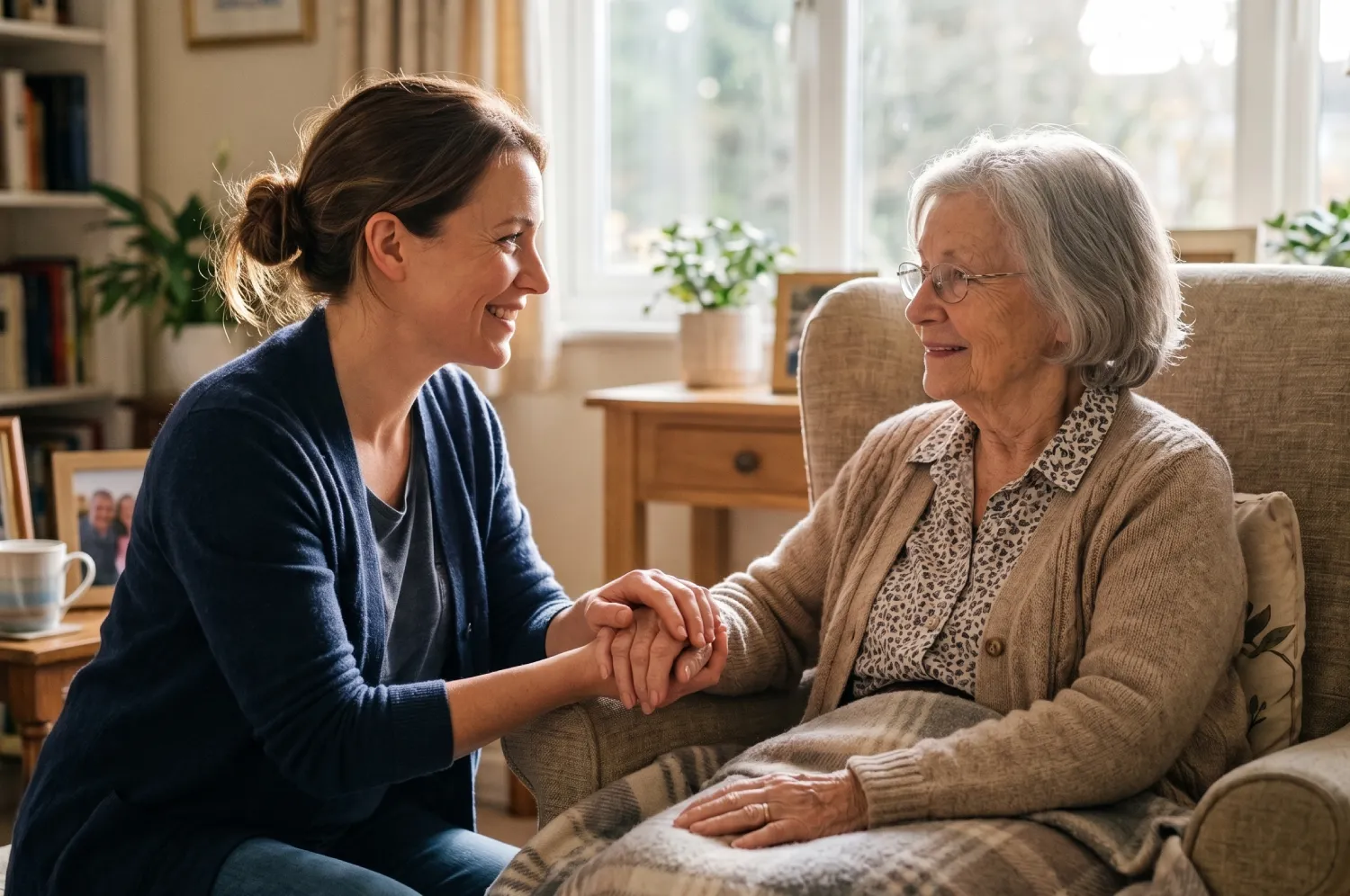
- Use gentle touch on the hand or shoulder to provide reassurance.
- Smile warmly to create a positive, welcoming atmosphere.
- Keep your body language open by facing your loved one directly and avoiding crossed arms.
- Watch for nonverbal signals such as restlessness, which may indicate discomfort or confusion.
Living with dementia can make it difficult for seniors to manage everyday tasks on their own. Certain age-related conditions can make it more challenging for older adults to age in place safely and comfortably, but experts in 24-hour home care for Columbus seniors are available around the clock to help aging adults manage their health. Whether your loved one is living with dementia or recovering from a stroke, you can trust the professional caregivers from Assisting Hands Home Care to enhance his or her quality of life.
How Should I Adjust My Speaking Style?
The way you speak can significantly impact how well your loved one understands and responds to you. Simple adjustments to your speaking style can reduce frustration and improve comprehension.
Effective speaking techniques:
- Speak slowly and clearly using a calm, reassuring tone.
- Use short, simple sentences with one idea at a time.
- Ask one question at a time and allow plenty of time for a response.
- Avoid pronouns when possible—use specific names instead of “he,” “she,” or “it.”
- Repeat information when necessary using the same words rather than rephrasing.
- Lower the pitch of your voice, as higher pitches can sound harsh or alarming.
Trained caregivers who have experience in communicating with seniors with dementia can be a fantastic resource for family members. If your senior loved one has been diagnosed with a serious condition and needs help with tasks like meal prep, transportation, medication reminders, bathing, and grooming, reach out to Assisting Hands Home Care, a leading provider of Columbus at-home care. We also offer comprehensive care for seniors with dementia, Alzheimer’s, and Parkinson’s.
What Environmental Factors Should I Consider?
The physical environment plays a crucial role in successful communication. Minimizing distractions and creating a calm setting helps your loved one focus on your conversation.
Environmental considerations:
- Reduce background noise by turning off televisions, radios, or other distractions.
- Ensure good lighting so your loved one can see your face clearly.
- Choose quiet spaces for important conversations.
- Minimize visual clutter that might cause confusion or overstimulation.
- Position yourself at eye level rather than standing over your loved one.
How Can I Respond to Challenging Behaviors or Confusion?
When your loved one becomes confused, agitated, or exhibits challenging behaviors, your response can either escalate or de-escalate the situation. Responding with compassion and flexibility is essential.
Helpful response strategies:
- Validate your loved one’s feelings rather than correcting or arguing.
- Avoid saying “Don’t you remember” which can cause embarrassment or distress.
- Redirect attention to a different topic or activity if your loved one becomes upset.
- Stay calm even when conversations become repetitive.
- Focus on the emotion behind your loved one’s words rather than factual accuracy.
- Use distraction techniques such as offering a favorite snack or looking at photos together.
What Communication Tools and Activities Can Help?
Supplementing verbal communication with visual aids and meaningful activities can enhance understanding and engagement.
Useful tools and activities:
- Photo albums to trigger memories and facilitate conversation
- Memory books with familiar images and personal information
- Visual schedules showing daily routines with pictures
- Music from your loved one’s younger years to spark recognition and joy
- Simple crafts or activities that provide nonverbal ways to connect
- Communication boards with pictures of common needs and feelings
Aging in place can present a few challenges for seniors living with dementia. However, with professional dementia home care that offers Columbus families peace of mind, they can still live independently at home. Families can rely on Assisting Hands Home Care to provide their elderly loved ones with mental and social stimulation, timely medication reminders, assistance with meal prep, and much more. For seniors Living with Dementia, our caregivers are available around the clock to help your loved one live a happier and healthier life. For compassionate, reliable in-home care, trust the experienced professionals from Assisting Hands Home Care. Reach out to one of our dedicated Care Managers today to learn about the high quality of our in-home care services.
Frequently Asked Questions
What should I do if my loved one doesn’t respond to me?
+
Give your loved one more time to process what you’ve said, as cognitive processing slows with dementia. If your loved one still doesn’t respond, try rephrasing gently or using a visual cue alongside your words.
How do I handle repetitive questions?
+
Answer each time with patience as if it’s the first time you’ve heard the question. Posting written reminders in visible locations can also reduce repetitive questioning.
Is it okay to use humor when communicating?
+
Yes, appropriate humor can lighten the mood and create positive interactions. Just ensure your loved one understands the humor and isn’t confused or feeling mocked by it.
What if my loved one speaks in a different language than usual?
+
Some people with dementia revert to their native language. Try using simple words from that language, use visual communication, or seek help from someone who speaks your loved one’s language.
Should I correct false memories or statements?
+
Generally, no. Unless it’s a safety concern, correcting false memories can cause distress. Instead, validate your loved one’s feelings and gently redirect the conversation.