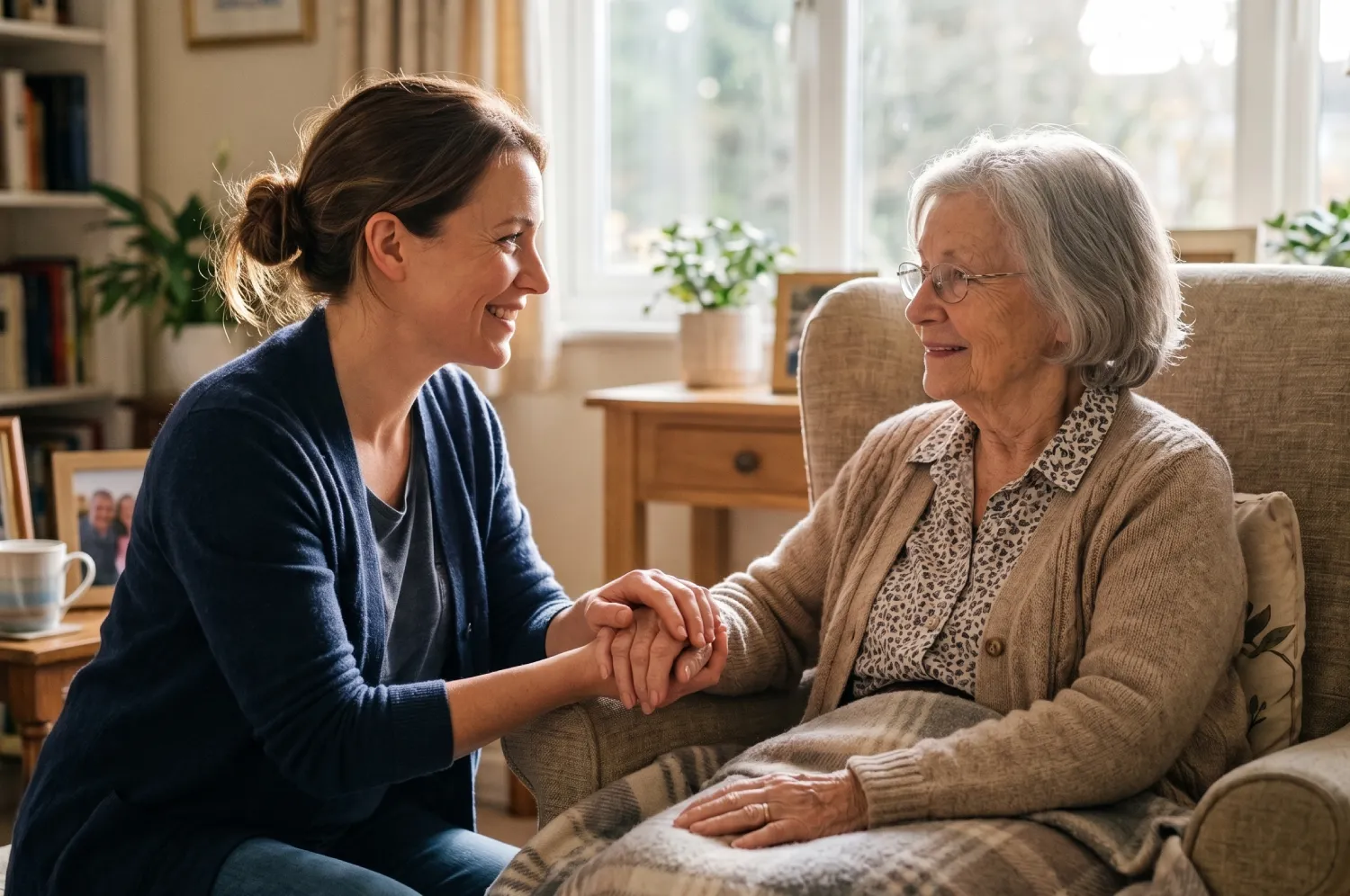
If you’ve ever walked away from a visit unsure how it went, you’re not alone. Many families say spending time with a loved one who has dementia feels different than it used to. Visits can feel unpredictable, emotional, and sometimes discouraging.
This shift isn’t because you’re doing something wrong. It’s because dementia changes how connection happens.
Understanding Why Visits Feel Harder
Spending time with someone who has dementia often comes with mixed emotions. You’re still showing up for someone you care about, but at the same time, you may notice changes in your loved one’s behavior, memory, or personality.
This creates a quiet form of grief. You’re adjusting to a new version of the relationship while still remembering what it used to be.
Because of that, many people walk into visits with expectations. They hope for meaningful conversations or familiar interactions. When those moments don’t happen, it can feel disappointing.
The reality is that dementia is inconsistent. Each visit may look different.
Adjusting Expectations during Visits
One of the most effective ways to improve visits is to stop trying to control the outcome. Instead of planning how the visit should go, allow it to unfold naturally.
Some days will feel smooth. Others may not. Letting go of expectations can reduce frustration and allow for more flexibility in the moment.
Communicating in Your Loved One’s Reality
A key part of dementia care is learning how to communicate differently.
Instead of correcting or redirecting seniors with dementia back to your version of reality, it often works better to meet them where they are. Trying to correct confusion can lead to stress or agitation. When you adjust your communication style, visits tend to feel calmer and more positive.
A professional dementia caregiver with training and experience in communicating with dementia patients can be a wonderful asset for your whole family. Certain age-related conditions can make it more challenging for older adults to age in place safely and comfortably, but experts in 24-hour home care for Columbus seniors are available around the clock to help aging adults manage their health. Whether your loved one is living with dementia or recovering from a stroke, you can trust the professional caregivers from Assisting Hands Home Care to enhance his or her quality of life.
Choosing the Right Time for Visits
Timing can significantly impact how a visit goes.
Many families visit in the evening due to work schedules. However, this is often when individuals with dementia experience increased confusion or restlessness.
Some families notice that simply changing the visit to earlier in the day leads to a better experience overall.
Keeping Visits Short and Consistent
Long visits may seem helpful, but they can be overwhelming. Both the visitor and the person with dementia can become fatigued.
Shorter visits that happen more regularly are often more effective. They help you maintain connection without creating emotional or mental strain.
Encouraging Participation through Simple Tasks
Instead of focusing on what your loved one can no longer do, focus on what he or she can still participate in.
For example, cooking may no longer be manageable from start to finish. However, simple steps like mixing or measuring can still be enjoyable and engaging.
By adapting activities, you create opportunities for involvement instead of removing them entirely.
Aging in place can present a few challenges for seniors living with dementia. However, with professional dementia care that offers Columbus families peace of mind, they can still live independently at home. Families can rely on Assisting Hands Home Care to provide their elderly loved ones with mental and social stimulation, timely medication reminders, assistance with meal prep, and much more. Our caregivers are available around the clock to help your loved one live a happier and healthier life.
Improving Conversations
Many common questions rely on short-term memory, which is often affected by dementia.
Questions like “What did you do today?” can lead to confusion or frustration.
Instead, shift conversations toward long-term memories. Talking about past experiences or familiar topics can create more meaningful engagement.
Looking at older photos is another helpful approach. These often trigger memories and encourage storytelling in ways recent photos may not.
Understanding that Presence Is Enough
Visits don’t always need to include structured activities or constant conversation.
Moments doing simple things like sitting together, listening to music, or going outside can create meaningful connection.
Being present is often more important than trying to fill time.
Knowing Why Visits Still Make a Difference
It’s common to wonder whether visits matter if your loved one doesn’t remember them.
Even if your loved one has severe memory loss, your presence still has an impact. People with dementia respond to familiarity, tone, and emotional cues, which remain important aspects of Living with Dementia.
Visits can reduce feelings of loneliness and provide comfort even if they’re not remembered later.
The Impact of Your Energy
Your mood and behavior influence how a visit unfolds.
If you arrive feeling rushed or stressed, it can affect the interaction. Approaching the visit with calm and patience often leads to a better experience.
Some families also find bringing another person along can make visits feel more relaxed and balanced.
There’s no perfect way to visit someone with dementia. The goal isn’t to get everything right.
Instead, focus on adapting your approach, using what still works, and staying present.
Dementia changes how connection looks, but it doesn’t remove the importance of spending time together.
Regular visits from friends and family members can reassure and calm aging loved ones who have dementia. Caring for a loved one with dementia can be challenging, but compassionate help is available. If your senior loved one has been diagnosed with a serious condition and needs help with tasks like meal prep, transportation, medication reminders, bathing, and grooming, reach out to Assisting Hands Home Care, a leading provider of Columbus senior home care. We also offer comprehensive care for seniors with dementia, Alzheimer’s, and Parkinson’s.
Want to hear more of my dementia advice? To join my monthly Real Talk webinar, register here.