Dementia affects millions of people worldwide and often brings about significant behavioral changes that may feel overwhelming for caregivers. Understanding these changes and learning how to manage them effectively can make a meaningful difference in maintaining quality of life for both individuals with dementia and their loved ones.
Understanding Behavioral Changes in Dementia
Behavioral changes associated with dementia are typically the result of changes happening in the brain. These changes may cause seniors to respond to their environments in unexpected ways. Common behavioral shifts include aggression, confusion, repetitive actions, or withdrawing from social interactions.
It’s vital to recognize these behaviors aren’t intentional but are a result of the condition. Being empathetic and patient can reduce stress for everyone involved. Additionally, for those Living with Dementia, acknowledging triggers such as overstimulation, unfamiliar settings, or physical discomfort can provide insight into what drives these behaviors.
The cognitive challenges that accompany dementia often leave aging adults unable to manage everyday tasks, which puts their safety and health at risk. If your senior loved one has been diagnosed with a serious condition and needs help with tasks like meal prep, transportation, bathing, and grooming, reach out to Assisting Hands Home Care, a leading provider of senior home care families can trust. We also offer comprehensive care for seniors with dementia, Alzheimer’s, and Parkinson’s.
The Importance of Communication
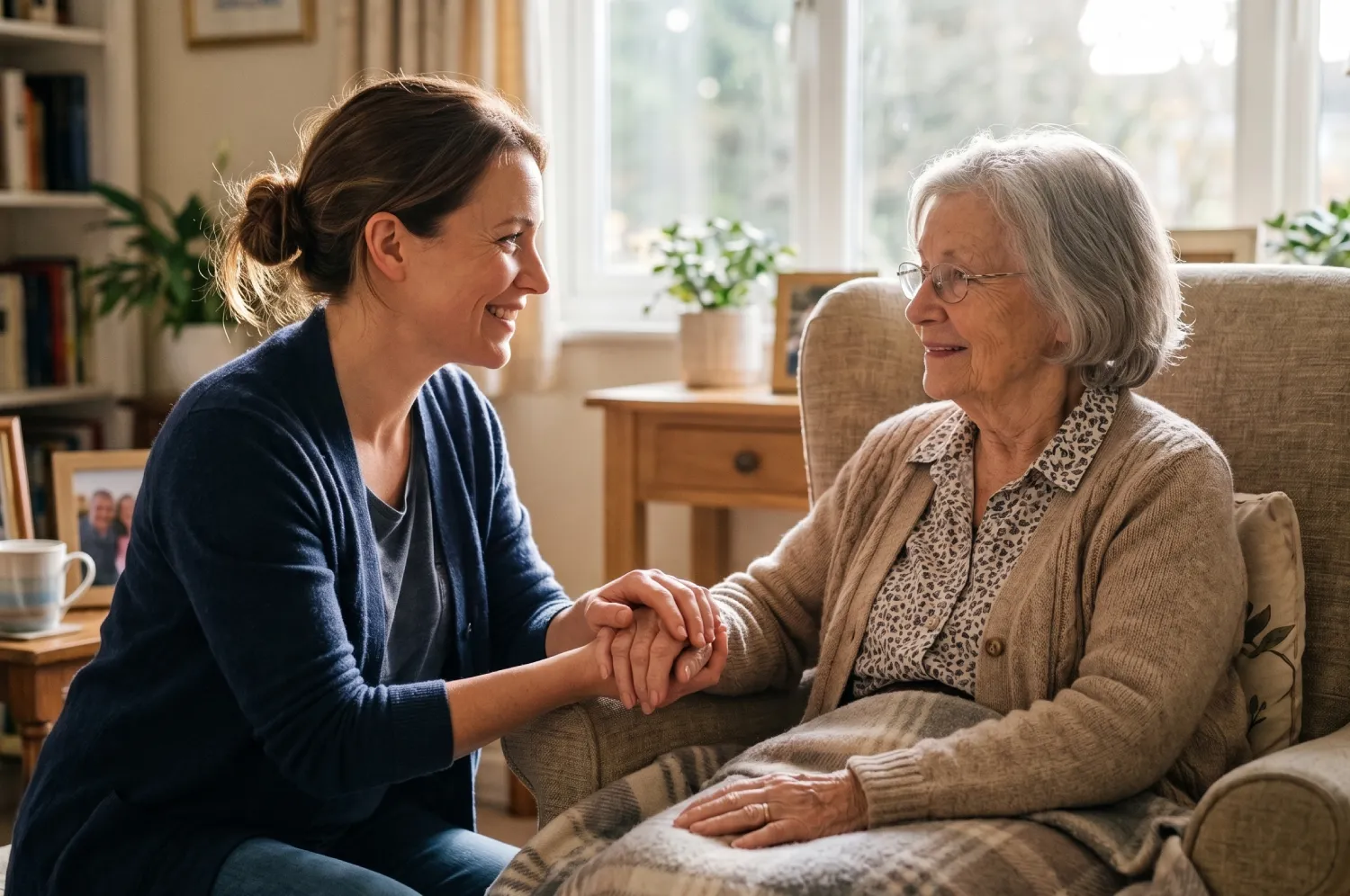
Effective communication is at the heart of addressing dementia-related behaviors. Individuals with dementia may face challenges expressing their needs or understanding others, leading to frustration or misunderstanding.
- Use clear and simple language – Speak slowly and use short, straightforward sentences to make your message easier to understand.
- Be patient and receptive – Give your loved one time to process what has been said and respond. Nonverbal cues like eye contact, touch, and a calm tone of voice can also help.
- Validate your loved one’s feelings – Even if the response seems inappropriate, acknowledge your loved one’s emotions. Saying phrases like “I can see you’re upset” can help your loved one feel heard and understood.
Creating a Supportive Environment
A calm and structured environment can significantly reduce behavioral symptoms and provide solace to individuals with dementia.
- Minimize stimulus overload – Too much noise, large crowds, or excessive visual stimuli can be overwhelming. Keep surroundings simple and quiet.
- Familiarity and routine – Predictable daily routines create a sense of security. Incorporate familiar objects, photos, and activities to provide comfort.
- Safety first – Remove hazards such as sharp objects and ensure home spaces are well lit and easy to navigate. This reduces confusion and minimizes potential risks.
Techniques for Managing Specific Behaviors
There are tailored strategies for managing common behaviors associated with dementia. Below are a few examples:
- Aggression
- Stay calm and avoid arguing.
- Identify possible causes like fatigue, pain, or hunger.
- Redirect attention to a soothing activity, like listening to music or looking through photo albums.
- Wandering
- Secure doors with safety locks and use monitoring systems to ensure your loved one’s safety.
- Offer opportunities for physical activity during the day to reduce restlessness.
- Place visual deterrents such as “STOP” signs on doors to discourage wandering.
- Repetition
- Redirect your loved one’s focus to an engaging task or activity.
- Provide reassurance without showing frustration, even if the behavior is challenging.
- Sundowning symptoms (confusion or restlessness during late afternoons and evenings)
- Adjust lighting to reduce shadows that might cause misperceptions.
- Engage your loved one in calming activities or conversations before evening sets in.
- Ensure naps and caffeine intake are limited during the day to promote better nighttime sleep.
Caring for a loved one with dementia is a challenging task for anyone. The responsibilities can sometimes feel overwhelming, but help is available. Seniors can face a variety of age-related challenges. Though some families choose to take on the caregiving duties, there may come a time when they need a trusted Columbus home care provider. Families sometimes need respite from their duties so they can focus on their other responsibilities, and some seniors need around-the-clock assistance that their families are not able to provide. Assisting Hands Home Care is here to help.
Caregiver Support and Self-Care
Caring for someone with dementia can be physically and emotionally demanding. It’s crucial for caregivers to prioritize their own wellbeing to continue providing effective care.
- Seek support – Join caregiver support groups or connect with fellow caregivers for advice, resources, and emotional support.
- Take breaks – Respite care services or help from friends and family can give you time for rest and rejuvenation.
- Focus on health – Remember to eat well, get enough sleep, and engage in regular physical activity. Mindfulness activities, like yoga or meditation, can reduce stress.
- Tap into professional help – Consult healthcare professionals or dementia experts for coping strategies or specialized care plans.
Even when families have the best intentions, caring for a senior loved one with dementia can be challenging. Fortunately, Assisting Hands Home Care is here to help. We are a leading provider of dementia care. Columbus families can take advantage of our flexible and customizable care plans, and our caregivers always stay up to date on the latest developments in senior care. Call one of our friendly Care Managers to learn about ways our experienced caregivers can help your loved one.