One of the hardest parts of dementia care is watching someone lose abilities he or she once used without thinking. Maybe your mom can no longer manage the bills. Maybe your husband gets confused using the phone. Maybe your dad can still walk just fine, but getting through a doctor’s appointment has become exhausting for both of you.
As caregivers, we naturally start paying attention to all of the things a person can’t do anymore. We have to. Those losses affect safety, routines, and how much help someone needs. But I always encourage families to make another list too: What can your loved one still do?
What can your loved one physically manage? What still brings him or he joy? What memories are easy for him or her to access? What activities still feel familiar? What can he or she do independently if we make just a few adjustments? That can-do list is where we start.
Look at the Environment Around Your Loved One
Sometimes we focus so much on the dementia that we forget to look at the environment. A person may struggle in one setting and do much better in another. That doesn’t mean the dementia changed overnight. It may mean the environment changed.
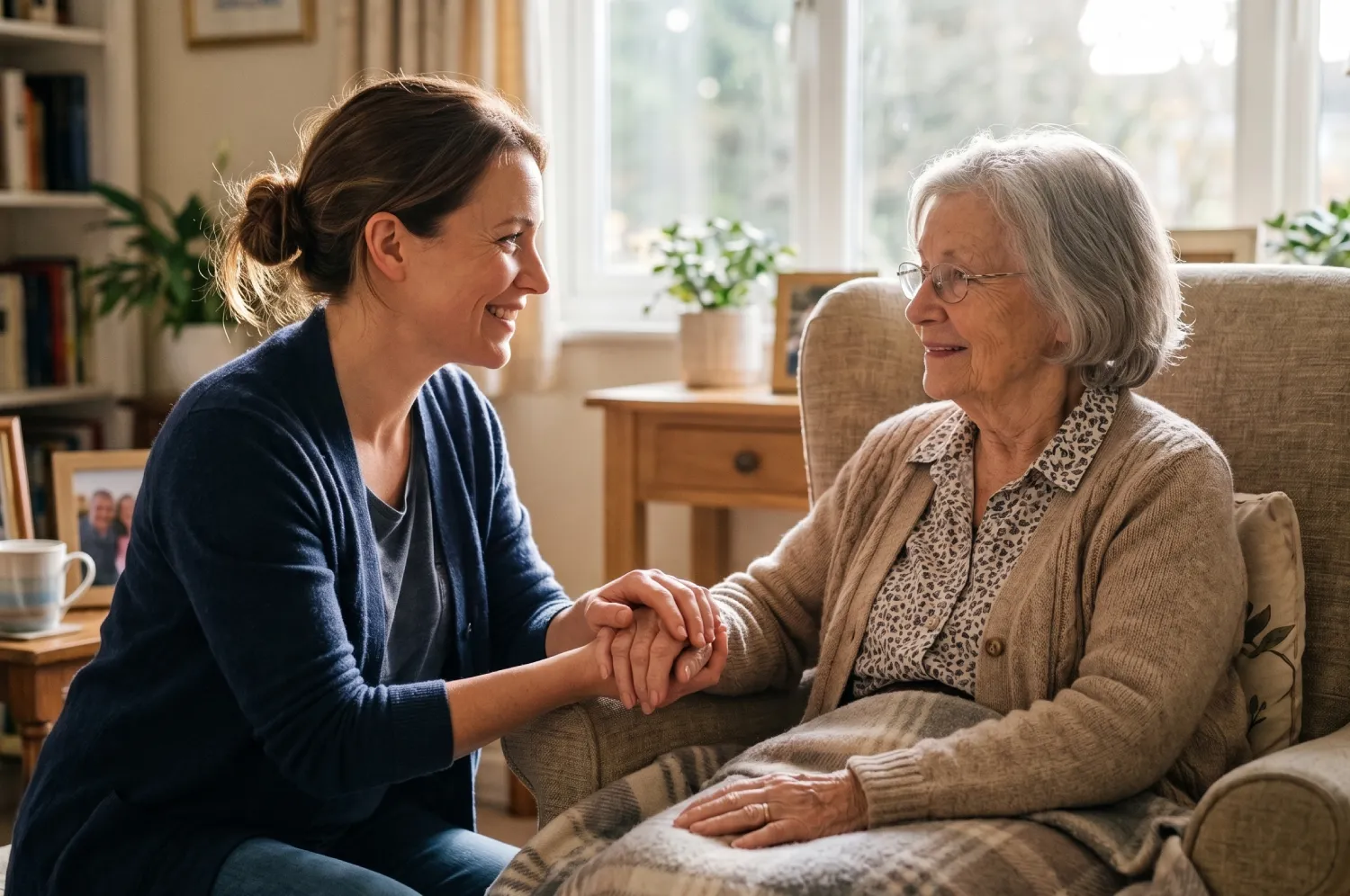
I like to think about four things: Is the space friendly, familiar, functional, and forgiving? A friendly environment includes people who make the person feel safe. Someone with dementia may not remember exactly who you are or how long he or she has known you, but the person can still respond to your tone, your body language, and the way you make him or her feel.
Familiarity can be equally powerful. I once knew a family whose dad was moving into memory care. He had used the same quilt for years, but his new bed was much smaller. Instead of deciding the quilt wouldn’t work anymore, they had it resized to fit his new bed.
That small change gave him something recognizable in a brand-new environment. We all look for familiar things when we’re uncomfortable, and dementia doesn’t take that need away.
Make the Environment Do Some of the Work
A functional space can take pressure off both the person with dementia and the caregiver. Maybe someone is constantly asking what time it is. A large, easy-to-read clock placed where the person actually spends his or her time may help. Maybe your loved one keeps picking up the television remote and trying to use it like a phone. Could some of the extra remotes be removed?
Maybe your loved one is having trouble finding the bathroom. A simple arrow and the word “bathroom” may be much more helpful than a long handwritten note explaining where to go. We sometimes overcomplicate these solutions when simple visual cues can go a long way.
The same is true with physical support. I once talked with a daughter who was struggling to take her mom to appointments. Her mom could still walk, but she became distracted in waiting rooms, wandered toward the desk, and had trouble staying focused while moving through the building.
The daughter felt like every appointment turned into chaos. I suggested trying a lightweight transport chair, and her first response was basically “But my mom can walk.”
And she could. The chair wasn’t about taking walking away. It was about making a difficult environment easier to manage. It helped them move through the appointment more smoothly and reduced frustration for both of them. That’s what adaptation looks like.
Highly trained caregivers with experience in caring for seniors with dementia can be a fantastic resource for family members. Families looking for top-rated Columbus in-home care providers can reach out to Assisting Hands Home Care. From respite care to specialized Alzheimer’s, dementia, stroke, and Parkinson’s care, there are many ways we can make life easier for seniors and their loved ones.
A Forgiving Space Lets Someone Keep Participating
People with dementia are going to make mistakes. The question is whether the environment makes those mistakes feel embarrassing or simply part of the moment.
Think about someone who has played cards with the same friends for decades. As dementia progresses, she may start missing turns or forgetting the rules. Her friends could tell her she can’t play anymore, or they could help her.
I saw this kind of thing all the time with bingo. Someone would start struggling to follow the numbers, and another resident would quietly move her chair a little closer. She’d cover her own square and then cover her friend’s.
No lecture. No correction. No announcement that someone couldn’t do it anymore. Just support. That’s a forgiving environment.
Substitute Instead of Subtract
One of the biggest ideas I share with caregivers is this: substitute instead of subtract. When something becomes difficult, we often jump immediately to taking it away.
The phone is causing problems, so take away the phone. Restaurants are becoming stressful, so stop going out. She can’t use the stove safely, so she can’t participate in meal preparation anymore. Sometimes removing something really is necessary, but not always.
Phones are a good example. A phone may become confusing because it requires so many steps. Someone may also begin calling repeatedly or contacting people at inappropriate times. But the phone may still represent security. It has always been the thing the person uses when he or she needs help.
So instead of immediately removing it, can we simplify it? Can we reduce the contacts? Can we use a phone with picture buttons? Can we limit who can be called? Sometimes the safest solution is still removal, but I want families to stop and ask whether there’s an adaptation first.
Aging in place can present a few challenges for seniors living with dementia. However, with professional dementia home care that offers Columbus families peace of mind, they can still live independently at home. Families can rely on Assisting Hands Home Care to provide their elderly loved ones with mental and social stimulation, timely medication reminders, assistance with meal prep, and much more. Our caregivers are available around the clock to help your loved one live a happier and healthier life.
One Little Card Saved a Restaurant Routine
One of my favorite examples involved a husband who was caring for his wife. They loved going out to eat, but dementia had made restaurants difficult.
His wife could no longer reliably read the menu or remember what she had ordered. She might order one meal and become upset when it arrived because she was certain she had asked for something else. Her husband was exhausted by the arguments and eventually thought they would have to stop going out.
Instead, he came up with a solution. He made a small card and gave it to the hostess when they arrived. The card essentially said, “Let my wife order whatever she wants, but please bring her a small hamburger, fries, and a Coke.”
She could order lobster. She could order soup. She could order whatever sounded good in that moment. Then the burger and fries would arrive, and she was happy.
That card preserved something much bigger than dinner. It gave them a reason to get dressed, got them out of the house, encouraged walking to and from the car, and created social interaction. It also gave her husband, who was caring for her around the clock, a change of scenery too.
He didn’t eliminate the experience because dementia made it harder. He changed the experience so they could keep doing it.
Your Approach Matters More than You Think
Caregivers are part of the environment too. Sometimes we can change the outcome by changing how we approach the person.
Instead of saying, “You need to get up and walk. You’ve been sitting there all day,” try saying, “Can you help me with something in the kitchen?” Both may accomplish the same thing, but one sounds like a demand and the other gives the person a purpose.
I saw this constantly when I worked in memory care. A caregiver might enter a resident’s room, speak loudly, pull the covers back and expect the person to get out of bed immediately. The resident would yell, curse, or resist.
Then we would change the approach. Turn on the light slowly. Introduce yourself. Gently touch the person’s arm. Give him or her a moment to wake up. Suddenly, the reaction could be completely different.
Sometimes what we get from someone with dementia is connected to what we bring to the interaction.
Be a Detective when Things Go Missing
Misplacing things is part of dementia. We used to say, “Nothing is lost. It’s just misplaced.” And I have a story that proves it.
One time, a resident’s dentures disappeared. We searched everywhere. We checked drawers. We checked the trash. We even wondered if they had somehow been flushed.
Finally someone said, “Did you look in the toilet tank?” And there they were. A full set of dentures.
People with dementia may hide things for many reasons. They may simply forget where they placed them, or they may be feeling anxious and want to keep something safe.
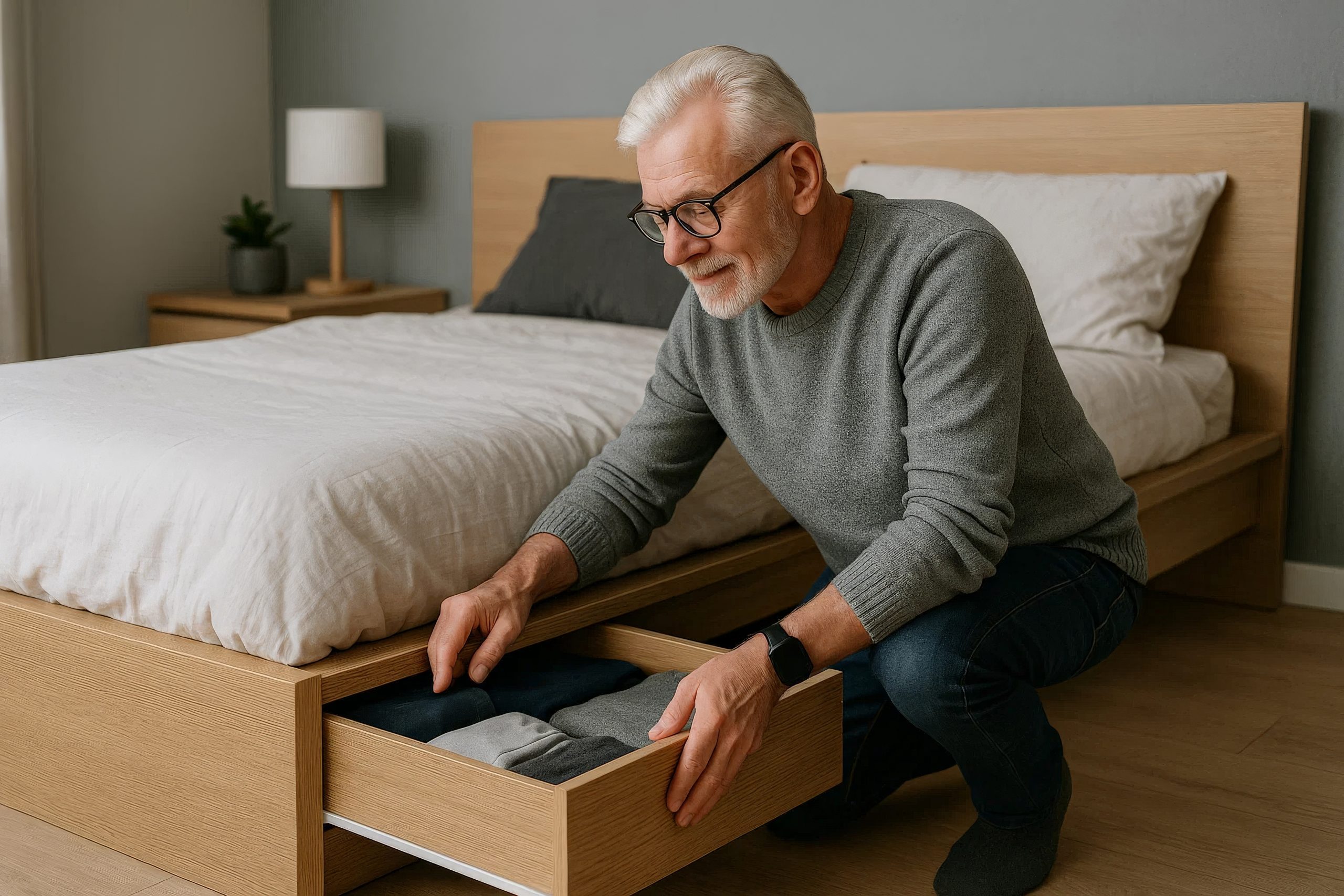
If your loved one regularly misplaces an inexpensive item that he or she becomes very upset without, consider having a duplicate. Simplify cluttered drawers, use clear containers, and learn the usual hiding places. Sometimes dementia care requires a little detective work.
Try Not to Turn Conversation into a Test
“Do you remember?” sounds harmless, but for someone with short-term memory loss, it can feel like a test he or she is expected to pass.
Instead of saying, “Do you remember Rick came to see you today?” you can simply say, “Rick came to see you today.” You’re providing the same information without asking your loved one to prove that his or her memory still works.
The same goes for phrases like “You’re wrong,” “You used to be able to do this,” or “Why can’t you do this anymore?” We already know dementia creates loss. We don’t have to point it out every time it happens.
Focus on What Still Works
Successful dementia care doesn’t mean there will never be frustration. It means we keep looking for opportunities to make things easier.
Maybe that means cutting someone’s food before the plate reaches the table. Maybe it means putting up a bathroom sign, using a transport chair in a busy doctor’s office, or letting a friend quietly help with bingo.
Every one of those changes sends the same message: you can still be part of this.
That’s what we’re trying to preserve. Not perfection but participation, dignity, independence, and connection.
Caring for a loved one with dementia can be challenging, but compassionate help is available. Certain age-related conditions can make it more challenging for older adults to age in place safely and comfortably, but experts in 24-hour home care for Columbus seniors are available around the clock to help aging adults manage their health. Whether your loved one is living with dementia or recovering from a stroke, you can trust the professional caregivers from Assisting Hands Home Care to enhance his or her quality of life. Call us today to talk to one of our compassionate Care Managers about our high-quality home care services.
Want to learn more about dementia and the challenges families face along the journey? Join me for my monthly Real Talk webinar, where I take an in-depth look at a specific dementia-related topic. Click here to learn more and register.